
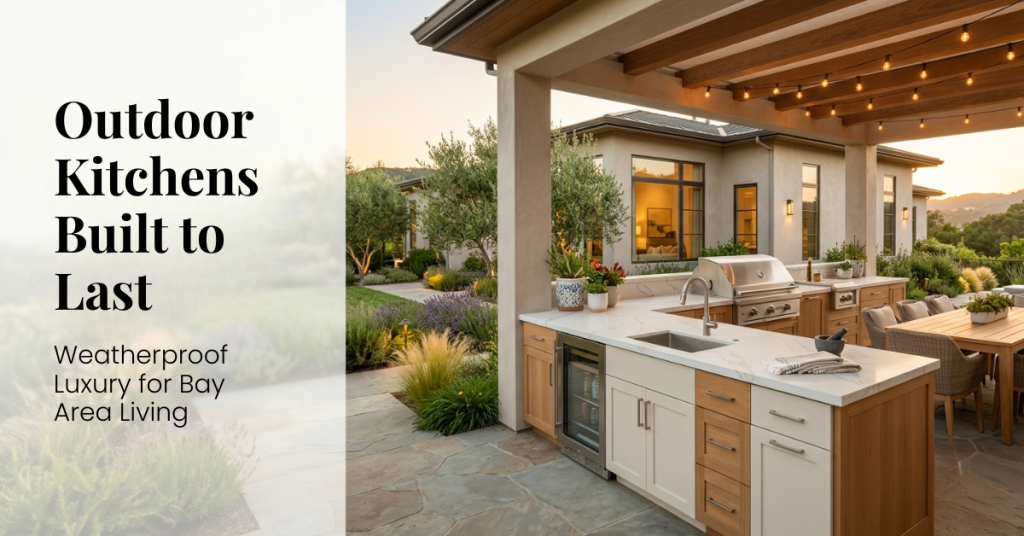
There is no better time to cook and gather outdoors than a Bay Area summer. Warm, dry evenings, long golden hours, and a mild climate make the backyard the most valuable room in the house from June through September. Yet the average backyard setup, a standalone grill and a folding table, barely scratches the surface of what an outdoor space can be. In 2026, the outdoor kitchen has become one of the most requested home upgrades in the region, and at the heart of every great one is a set of cabinets built to survive the elements. If you are dreaming of alfresco dinners this summer, understanding outdoor kitchen cabinets is the right place to start.
Why the Outdoor Kitchen Has Grown Up
The backyard barbecue has quietly transformed into a full outdoor culinary space. Homeowners increasingly treat the outdoors as a genuine extension of the home rather than a place reserved for the occasional weekend cookout. Instead of one grill, today’s outdoor kitchens fold in prep counters, refrigeration, storage, beverage stations, and comfortable seating so the host can cook, serve, and socialize in one place without running back and forth to the indoor kitchen.
There is a practical Bay Area bonus, too. Cooking outside keeps heat out of the house during the warmest months, which eases the load on air conditioning and can trim summer energy use. Combine that with the lifestyle appeal, and it is easy to understand why real-estate professionals routinely cite outdoor kitchens as one of the strongest returns on a home-improvement dollar.
The Non-Negotiable: Weatherproof Cabinetry
Here is the mistake that sinks many outdoor kitchens: using cabinetry that was never built to live outside. Standard interior cabinets, and even many so-called outdoor units, warp, swell, rust, and peel once they face real sun, moisture, and temperature swings. A beautiful design means nothing if the foundation fails after two seasons.
True weatherproof outdoor kitchen cabinets are engineered from materials chosen specifically for the outdoors. Marine-grade and high-density polymer constructions resist water, humidity, and UV damage while holding their shape and finish year after year. The best options replicate the warm look of real wood but shrug off rain, heat, and sun. Just as important as the boxes is the hardware: hinges, drawer slides, and fasteners should be corrosion-resistant, because even flawless cabinets underperform when their fittings rust.
When you invest in cabinetry built for weather from the start, the upgrades homeowners want most — organized storage, built-in appliances, and a clean, cohesive look actually last. That durability is what makes the whole outdoor kitchen worth building.
2026 Outdoor Kitchen Trends Worth Knowing
If you are planning a project this summer, a few clear directions are shaping the best outdoor kitchens of 2026:
Make it match the house
The strongest trend of the year is continuity. Outdoor kitchens are being designed to mirror the main home, with cabinet door styles, colors, and hardware that echo the interior kitchen. Shaker-style cabinetry, in particular, is appearing outdoors to create a seamless indoor-outdoor connection so the space reads as an intentional room, not an add-on.
Build in a full beverage station
The days of a lonely mini-fridge tucked in as an afterthought are over. In 2026, a complete drink station — refrigeration, storage for glassware, and a serving ledge — is part of the core plan. The goal is simple: guests should be able to grab a drink without anyone walking inside.
Design zones, not just a grill
Great outdoor kitchens are organized into zones , a cooking zone for the grill and burners, a prep-and-cleanup zone, and a serving-and-social zone. Thoughtful cabinetry is what defines those zones, keeping tools and serveware exactly where they are needed and clutter off the counters.
Plan for shade and evening use
Pergolas and covered structures extend how long the space is comfortable and usable, while layered lighting keeps it beautiful after sunset. A kitchen that looks great in daylight but goes dark at dusk loses much of its value on those long summer evenings.
Designing the Right Layout for Your Backyard
You do not need an enormous yard to build a functional outdoor kitchen; you need a smart layout. A few planning principles help:
- Start with the work triangle. Position the grill, prep space, and refrigeration so the cook can move efficiently between them, just as you would indoors.
- Prioritize covered, weatherproof storage. Cabinets that keep tools, dishes, and pantry items outside eliminate constant trips back to the house and keep the party flowing.
- Choose durable, low-maintenance countertops. Engineered quartz and natural stone offer a clean look with the everyday toughness an outdoor surface demands.
- Leave room to grow. A modular approach lets you start with the essentials — grill island, counter, and cabinetry — and add a beverage center, bar seating, or a fire feature later.
- Plan utilities early. Gas, water, and electrical runs are far cheaper to install before hardscaping goes in. Even if you are phasing the build, rough in the connections up front so future additions are simple.
- Add a water source. A compact prep sink dramatically increases how usable the space is, letting you rinse produce, fill pots, and clean up without trips inside — a small addition with an outsized payoff.
Avoiding the Most Common Outdoor Kitchen Mistakes
Because an outdoor kitchen is a bigger investment than a grill on wheels, it is worth learning from the mistakes that most often derail these projects:
- Using the wrong cabinetry. It bears repeating because it is the number-one regret: indoor or low-grade cabinets will not survive outside. Insist on genuinely weatherproof construction and corrosion-resistant hardware from day one.
- Skipping the prep and landing space. Homeowners fixate on the grill and forget they need counter room to set down platters, prep ingredients, and plate food. Build in more counter space than you think you need.
- Placing it too far from the house. A beautiful outdoor kitchen at the back of the yard often goes unused. Position it close enough to the indoor kitchen that carrying items back and forth is easy, especially early on.
- Forgetting lighting and shade. Without cover, a summer afternoon can be too hot to cook in; without lighting, the space empties at dusk. Plan both from the start rather than bolting them on later.
- Treating it as a separate design. The most dated-looking outdoor kitchens ignore the house entirely. Echo your home’s materials, cabinet style, and color so the space feels like a true extension.
Designing for the Bay Area Climate
The Bay Area is kinder to outdoor kitchens than many parts of the country, but our climate still has quirks worth designing around. Coastal and bayside areas like Martinez see morning fog and marine moisture that, over years, can corrode cheap hardware and dull inferior finishes — another reason weatherproof materials matter even in a mild climate. Intense afternoon sun in inland East Bay neighborhoods calls for UV-stable surfaces and finishes that will not fade or chalk. And because our summers are long and dry, a well-planned outdoor kitchen here can realistically be used most of the year, which makes covered structures and layered lighting especially valuable investments. Choosing materials with proven performance in our specific conditions — and long warranties to back them up — is the difference between a space that still looks new in a decade and one that needs constant touch-ups.
A Full-Service Partner for Your Outdoor Kitchen
An outdoor kitchen touches cabinetry, countertops, tile, and hardware all at once, which is exactly why it pays to work with a single design partner rather than juggling several vendors. Bella Casa Cabinets & Design is a full-service kitchen partner, offering custom cabinets, countertops in quartz, granite, and stone, backsplash and wall tile, and the hardware and accessories that finish the space — everything under one roof.
Our process is the same one that makes our indoor kitchens so successful: a consultation to understand how you want to use the space, 3D renderings so you can see your outdoor kitchen before it is built, expert guidance to balance style, function, and budget, and precise installation. With generations of family craftsmanship behind us, we help Martinez and Bay Area homeowners design outdoor kitchens that look like a natural extension of the home and are built to handle every summer for years to come.
Thinking about an outdoor kitchen for this summer and beyond? Talk to a Bella Casa designer about weatherproof cabinets and a layout made for your backyard.
Frequently Asked Questions
What are the best cabinets for an outdoor kitchen?
Look for cabinets engineered specifically for the outdoors — marine-grade or high-density polymer construction that resists water, humidity, and UV damage, paired with corrosion-resistant hinges and hardware. The best options mimic the look of real wood while shrugging off sun and rain.
Can I use regular indoor kitchen cabinets outside?
No. Standard interior cabinets — and even many low-grade outdoor units — warp, swell, rust, and peel once exposed to real weather. Using true weatherproof cabinetry from the start is the single most important decision for an outdoor kitchen that lasts.
Do outdoor kitchens add value to a home?
Yes. Outdoor kitchens are consistently ranked among the strongest returns on a home-improvement investment, and they expand usable living space — a major draw for buyers in a climate like the Bay Area’s.
What countertop material is best for an outdoor kitchen?
Engineered quartz and durable natural stone are popular choices because they deliver a clean, high-end look with the everyday toughness an outdoor surface needs. Your designer can recommend the best option for your exposure and layout.
Can I use an outdoor kitchen year-round in the Bay Area?
Largely, yes. Our mild, dry climate makes outdoor kitchens usable most of the year, especially when you add a pergola or covered structure for shade and rain protection and layer in lighting so the space stays comfortable into the evening.